
 Aug 2026
The Saffron Season in Kashmir: Why Autumn Is the Perfect Time to Visit Paradise
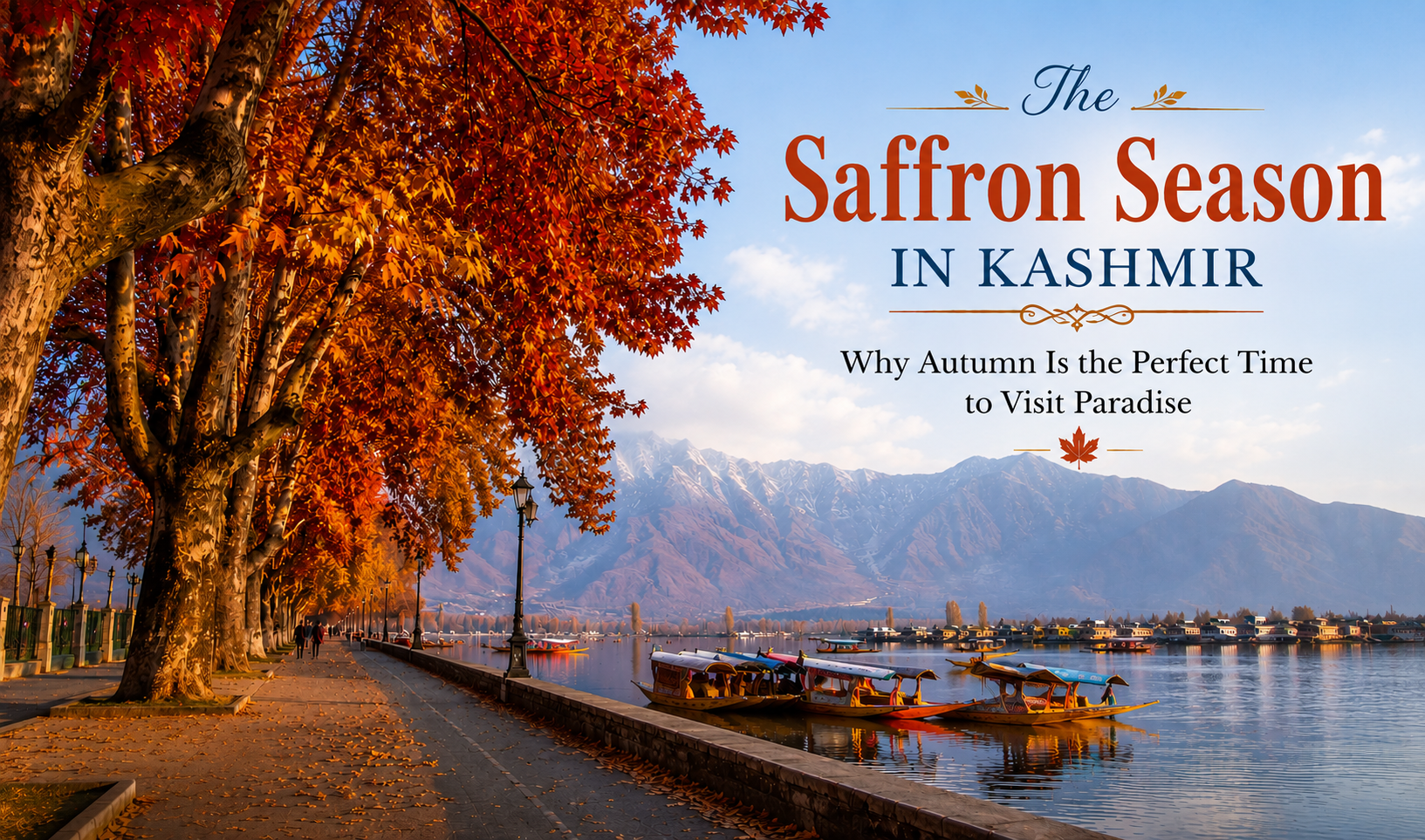
By late September, something shifts in Srinagar. The morning air carries a faint chill that wasn't there a few weeks earlier. Houseboat owners start airing out heavier quilts. Along the boulevard, Chinar trees begin their slow conversion from deep green to shades of copper and rust, and by October, entire avenues look like they've been dipped in tea. Locals sometimes call this season "Harud," autumn, and it changes the rhythm of the valley in ways that are easier to notice than to explain until you've stood under a Chinar in mid-October and watched a single leaf take almost a full minute to reach the ground.
Autumn brings something else too: the saffron harvest. Around Pampore, a short distance from Srinagar, the karewas, flat-topped plateaus where saffron has been grown for generations, turn a pale violet as crocus flowers push through the soil almost overnight. Families walk into the fields before sunrise to hand-pick flowers that wilt within a day of blooming. It's one of the more distinctive agricultural sights in India, playing out for only a few weeks each year, in the same season the rest of Kashmir is quietly changing colour.
This is really what autumn here is about. It isn't a different-colored version of the same summer trip; it's a season with its own calendar, its own smells, and its own pace, and the saffron harvest is one of the clearest ways to feel that difference firsthand.
Why Autumn Feels Different in Kashmir
Summer in Kashmir tends to be about escaping heat elsewhere in India: cool evenings, green meadows, and gardens in full bloom. Autumn works differently. Days are shorter, the light sits lower for longer stretches, and mornings can be noticeably cold even when afternoons stay pleasant. Weather in the Valley shifts quickly and varies year to year, so it's worth checking a current forecast closer to your travel dates.
What autumn reliably delivers is colour. The Chinar, Kashmir's signature tree, planted widely across Srinagar's gardens, boulevards, and old-city lanes, turns through yellow, orange, deep red, and finally burnt brown before the leaves fall. Combined with clearer skies once the monsoon passes and softer, angled sunlight, the city photographs differently than it does in June.
There's also a quieter, practical shift: after the peak summer rush, Srinagar settles into a calmer pace, with shikara wallahs less rushed and houseboats less fully booked. None of this is guaranteed; tourist flow varies year to year, but travellers who've visited both seasons often describe autumn as the version of Kashmir with more room to breathe.
What Makes Kashmir's Saffron Season So Special?
Saffron comes from the dried stigmas of the Crocus sativus flower, three thin, deep-red threads plucked from inside each bloom by hand, since no machine can do this delicately without damaging them. It takes an enormous number of flowers to produce even a small quantity of dried saffron, which is why it remains one of the most labour-intensive spices grown anywhere and why it commands a high price even in small amounts.
Kashmir has grown saffron for centuries, and the crop is genuinely woven into the region's agricultural identity; locals call it "kong," and it shows up in ceremonies, in Kahwa, in wedding feasts, and in everyday conversation about the Valley's autumn. What makes the season worth experiencing isn't a superlative claim about ranking; it's that an entire agricultural tradition, tied to a single short window of weather and light, still plays out largely by hand, the way it has for generations. That combination of fragility, timing, and craft is what gives the harvest its character.
Pampore: The Heart of Kashmir's Saffron Country
If saffron has a hometown in Kashmir, it's Pampore. The town sits along the flat Karewa plateaus that make up the region's saffron belt, and it's often referred to locally as the valley's saffron town given how much cultivation is concentrated here.
Saffron farming in Pampore isn't a tourist performance; it's a livelihood. Families who've grown the crop for generations manage small plots, and the harvest window asks a lot of them: flowers bloom fast, wilt within a day, and need picking at the right moment to preserve colour and aroma. It's demanding, time-sensitive work that deserves to be treated as such rather than as a backdrop for a quick photo.
For travellers, visiting during this period offers something different from typical sightseeing: a chance to see an agricultural tradition in motion rather than read about it on a placard. It's worth approaching with the same respect you'd bring to any working farm: as a guest, not an audience member.
When Is Saffron Season in Kashmir?
Saffron flowering and harvesting in Kashmir generally take place over a few weeks in autumn, roughly from mid-to-late October into early November, though the exact window shifts a little each year depending on temperature and rainfall. The bloom period itself is short and intense rather than a long, steady season, which is part of why it's considered such a distinctive time to visit.
Because the timing depends on local weather conditions in a given year, it isn't possible to promise an exact date months in advance. If the saffron fields are a specific reason for your trip, it's worth checking closer to your travel dates through local tour operators, recent traveller reports, or the hotel's front desk once you've arrived rather than locking your entire itinerary around a single assumed week.
What Does a Saffron Field Look Like During Harvest?
From a distance, a blooming saffron field looks almost like lavender or crocus flowers in dense rows across plain brown soil, with none of the height of, say, a mustard field. Up close, each flower is small and cup-shaped, with pale purple petals and three vivid red-orange stigmas at its centre. Those threads are the saffron.
Harvesting usually happens early morning, while flowers are still fresh and before the sun softens them. Pickers move along the rows bent low, plucking blooms by hand into cloth pouches, working quickly because the flowers lose quality fast once cut. It's unhurried in appearance but precise in practice, a rhythm built from repetition, not performance.
Not every field is open to visitors, and access depends on the specific plot, the farmer, and conditions on a given day; this isn't a public park. If you do get close to working fields, ask before stepping between rows, and treat any invitation to look, photograph, or try picking as a courtesy, not an entitlement.
Kashmir in Autumn Beyond the Saffron Fields
Saffron is one reason to visit in autumn, but not the only one; the season changes almost everything else worth seeing around Srinagar too.
Dal Lake looks different in autumn light. The water tends to be stiller, mornings often bring a soft mist that lifts slowly, and the surrounding mountains sit sharper against a clearer sky. A slow Shikara ride on Dal Lake at sunrise, gliding past floating vegetable gardens and houseboats, feels noticeably calmer than the same ride amid peak summer traffic simply a quieter, cooler version of the classic Dal Lake experience.
Chinar trees deserve their own mention, given how closely they're tied to this season. Planted across Srinagar's gardens, the Boulevard, and old-city lanes, these broad-leafed trees turn through a slow gradient of yellow, orange, and deep red before shedding entirely.
Srinagar's Mughal Gardens, Nishat Bagh, Shalimar Bagh, and Chashme Shahi take on a different mood too. The terraces and fountains stay the same, but the surrounding Chinar canopy adds color the summer visit doesn't have, and crowds tend to be thinner.
For a wider view, the hilltop Shankaracharya Temple offers a vantage point over Srinagar and Dal Lake, worth adding to your things to do in Srinagar list, though it's sensible to confirm current access and timing locally before you go.
Why Autumn Is Excellent for Kashmir Photography
Autumn light in Kashmir sits at a lower angle for longer stretches of the day, which photographers generally find more forgiving than the harsh overhead summer sun. Combined with Chinar foliage, calmer water on Dal Lake, and the texture of saffron fields, there's a genuinely wide range of subject matter within a fairly compact area around Srinagar.
A few practical notes:
● Early morning light tends to be softer than midday, particularly around the lake and gardens.
● Golden hour around sunrise and sunset is when chinar colours and water reflections look the richest.
● Near saffron fields, don't step onto planted rows for a better angle, and don't assume every field is open for photography; ask first.
● For close portraits of farmers, sellers, or houseboat owners, ask before you shoot, not after.
● Weather shifts quickly in autumn, so keep cameras and phones protected from sudden wind, dust, or light rain.
No single spot guarantees a particular shot; light, weather, and season all vary, but autumn generally gives photographers more to work with than a flat, bright summer afternoon.
The Flavours of Autumn in Kashmir
Kashmiri food carries the saffron story just as much as the fields do. Saffron threads show up in kahwa, the traditional green tea served with cardamom, cinnamon, and sometimes crushed almonds, where a few strands are enough to tint the cup gold and add a distinct aroma. It also appears in dishes served on special occasions, from rice preparations to sweets, used more for color and tradition than bulk flavor.
None of this needs exaggerated health claims attached; saffron is valued in Kashmiri cuisine for taste, color, and cultural association, not as a cure for anything. What's genuinely worth experiencing is the sensory link between season and plate: you can walk through a saffron field in Pampore in the morning and sit down to a cup of kahwa made with the same spice by evening. Exploring Kashmiri food more broadly during an autumn trip, from wazwan staples to street-side kebabs in the old city, rounds out the picture nicely.
Why Autumn May Be Better for Some Kashmir Travellers
Autumn isn't objectively "better" than summer or spring in Kashmir; each season has a genuinely different character. But it does suit certain kinds of travelers particularly well:
● Those who prefer cooler weather over the mild warmth of summer.
● Photography enthusiasts drawn to color, texture, and softer light.
● Nature lovers interested in a landscape mid-transition rather than at peak green.
● Couples and honeymooners looking for a calmer, less crowded version of popular sights.
● Repeat visitors who've already seen Kashmir's gardens and lakes in summer and want a different perspective.
● Travelers specifically interested in agriculture, food, and local culture, given the saffron harvest.
If your priority is spring blossoms or peak-summer meadow trekking, other seasons will serve you better. Autumn's appeal is specific rather than universal, which is exactly what makes it worth planning for deliberately rather than defaulting to.
Planning a Kashmir Autumn Holiday
1. What to pack: Layer rather than commit to one weight of clothing; mornings and evenings can be cold, while afternoons stay mild. A warm jacket, a couple of light sweaters, comfortable walking shoes, sunglasses for bright midday light on the water, and something to protect your camera or phone from wind or light rain will cover most situations.
2. Travel planning: Check the weather forecast in the days before you leave. Confirm current timings for gardens, the temple, and any saffron-field visits, since these can change. If a saffron-field visit matters to your trip, confirm access locally rather than assuming it in advance, and keep some flexibility in your itinerary; a loosely planned autumn week generally works better than a rigid one.
Where to Stay During an Autumn Kashmir Trip
Autumn days in Srinagar tend to follow a pattern: an early start while the light is soft, a few hours exploring the lake or a trip toward Pampore, and a slower, quieter evening once the temperature drops. A comfortable, well-located base makes that rhythm easier to manage.
Hotel Lake View Kashmir sits directly on Dal Lake, at Ghats 13-14 on Boulevard Road, making it a convenient base for a Dal Lake-centered autumn itinerary. It offers lake-view rooms overlooking the water and mountain-view rooms for those who prefer the surrounding hills, and it sits close to the hills leading up to Shankaracharya Temple if that viewpoint is on your list.
After a morning on the water or an afternoon near the saffron belt, there's real appeal in coming back to a lake-facing room, ordering something warm through in-room dining, and letting the evening slow down. The Bollywood Curry Restaurant serves multi-cuisine food if you'd rather sit down properly, and the SukhoThai Spa is a reasonable way to unwind after a day spent walking through gardens and along the boulevard in the cold. None of this replaces the trip itself; it's simply the kind of base that lets you focus on the Valley rather than the logistics of getting around it. If you're weighing options, it's worth checking the property's hotel amenities before you book your stay.
From Srinagar to Pampore: Making the Most of the Season
Pampore lies a short distance from Srinagar, and many travellers staying in the city plan a half-day or full-day trip out to the saffron belt as part of a broader autumn itinerary, often alongside the Mughal gardens or a Shikara ride. Exact travel time depends on current road conditions and where within the saffron belt you're headed, so it's sensible to confirm this locally through your hotel's help desk or a local driver rather than penciling in a fixed number of hours.
Because saffron flowering is genuinely seasonal and field access can vary day to day, it's worth treating a Pampore visit as one flexible piece of a longer Srinagar-based trip rather than the sole reason to travel. Building it into a wider Kashmir travel guide alongside the lake, the gardens, and the old city tends to make for a more satisfying trip than betting everything on one narrow window.
Responsible Saffron Tourism
The saffron harvest is someone's livelihood before it's anyone's photo opportunity, and a few basic habits go a long way toward keeping that visit welcome rather than intrusive:
● Ask permission before stepping onto private agricultural land; these are working farms, not open fields.
● Ask before photographing farmers up close, especially mid-task.
● Stay off planted rows; a crushed crocus doesn't grow back that season.
● Don't pick flowers yourself unless a farmer specifically invites you to.
● Avoid crowding or interrupting active harvesting; a few minutes of someone's morning is still their morning.
● If you're buying saffron, ask the seller about its origin and don't be swayed by claims that sound too good to be true; genuine Kashmiri saffron is a seasonal, limited product, not something available in unlimited bulk at bargain prices.
● Carry your own trash back out, and be mindful generally of how you move through a farming community that isn't set up as a tourist attraction.
None of this is complicated, but it makes a real difference to the people whose fields you're standing in.
Is Autumn the Perfect Time to Visit Kashmir?
Honestly, it depends on what you're looking for. Autumn brings the saffron harvest, Chinar color, cooler weather, strong photography light, and a noticeably calmer version of popular sights like Dal Lake and the Mughal gardens. It suits travelers drawn to seasonal experiences, food, and agriculture more than someone chasing peak-summer meadows or spring blossoms.
Kashmir genuinely changes character across the year: winter brings snow and stillness, spring brings blossoms, and summer brings green meadows. Autumn's specific contribution is color, harvest, and a slower pace. Whether that makes it "the" perfect time depends on what you came for.
What autumn ultimately offers isn't a prettier version of the same trip; it's a different one. The Chinar trees turning color along the Boulevard, the saffron pickers bent over the karewas near Pampore before sunrise, and the stillness on Dal Lake once the morning mist lifts these are seasonal, tied to a few short weeks each year. Missing them isn't the end of the world; Kashmir will still be there in spring or summer. But if you've been curious about the saffron season or you've already seen the valley in warmer months, autumn is worth building a trip around.
Staying at Hotel Lake View Kashmir on the Boulevard puts you within easy reach of the lake, the old city, and the road toward Pampore, a sensible base for exactly this kind of season-led trip. If you'd like help thinking through timing or a rough itinerary, you're welcome to contact Hotel Lake View, Kashmir directly before you travel.
Frequently Asked Questions
1. When is saffron season in Kashmir?
Saffron flowering and harvesting in Kashmir generally take place over a few weeks in autumn, roughly from mid-to-late October into early November. The exact timing shifts each year slightly based on local weather, so it's best to confirm closer to your travel dates rather than planning around one fixed week.
2. Where is saffron grown in Kashmir?
Saffron is grown across the Karewa plateaus of the Kashmir Valley, with Pampore, a short distance from Srinagar, being the most well-known centre of cultivation. Surrounding villages in the same belt also contribute to the region's saffron harvest each autumn.
3. Why is Pampore famous for saffron?
Pampore sits on flat karewa land that has supported saffron cultivation for generations, making it the traditional heart of Kashmir's saffron-growing region. Its concentration of farms and long-standing farming families is why it's often referred to locally as the Valley's saffron town.
4. Is autumn a good time to visit Kashmir?
Autumn suits travellers who enjoy cooler weather, Chinar foliage, softer photography light, and a quieter pace around popular sights. It's not objectively better than other seasons, but it offers a genuinely different experience centred on colour, harvest, and calm compared to peak summer.
5. What does Kashmir look like in autumn?
Kashmir in autumn is marked by Chinar trees turning yellow, orange, and red across Srinagar's gardens and boulevards; cooler and clearer air; and saffron fields near Pampore blooming in shades of violet. The overall landscape shifts from summer green to warmer, earthier tones.
6. Can tourists visit saffron fields in Kashmir?
Many travellers do visit the saffron belt near Pampore during harvest season, though access to specific fields depends on individual farmers and local conditions, since these are working farms rather than public parks. It's best to confirm current access locally and to ask permission before entering any field.
7. What should I wear in Kashmir during autumn?
Layered clothing works best, since mornings and evenings can be cold while afternoons are milder. A warm jacket, comfortable walking shoes, and something to protect your camera or phone from occasional wind or light rain are generally sufficient.
8. What are the best places to visit in Srinagar during autumn?
Dal Lake, the Mughal Gardens (Nishat Bagh, Shalimar Bagh, and Chashme Shahi), the Chinar-lined Boulevard, and the Shankaracharya Temple viewpoint are all worth visiting in autumn, when foliage colour and clearer skies add to the experience.
9. Is Dal Lake worth visiting in autumn?
Yes, autumn tends to bring calmer water, softer morning light, and thinner crowds to Dal Lake compared to peak summer. A sunrise Shikara ride during this season offers a noticeably quieter experience of the lake and its surrounding mountains.
10. Where should I stay when visiting Kashmir during saffron season?
A hotel located on or near Dal Lake in Srinagar makes a convenient base since it puts you within reach of the lake, the old city, and the road toward Pampore. Hotel Lake View Kashmir, on Boulevard Road at Dal Lake, offers lake-view and mountain-view rooms suited to this kind of itinerary.


2 Comments
Martin King
May 15, 2025Lorem ipsum dolor sit amet, consectetur adipiscing elit. Sed do eiusmod tempor incididunt ut labore et dolore magna aliqua. Ut enim ad minim veniam, quis nostrud exercitation ullamco laboris nisi ut aliquip ex ea commodo consequat.
Martin King
May 15, 2025Lorem ipsum dolor sit amet, consectetur adipiscing elit. Sed do eiusmod tempor incididunt ut labore et dolore magna aliqua. Ut enim ad minim veniam, quis nostrud exercitation ullamco laboris nisi ut aliquip ex ea commodo consequat.